


Ancient Celtic Wisdom Meets Modern Classical: A Gentle Invitation into the work of David W. Cook
Updated: Jun 3
Penelope Hawthorne | June 1st, 2026 | Literary Liaison to The Order of The Triquetra

There are some artists who perform beautifully, and there are others who invite you into a way of being. David W. Cook belongs to the latter. As an International Award-Winning Tenor, Seeker, Philosopher, Cultural Ambassador, and Celtic Celebrant, he has come to understand the voice not simply as an instrument, but as a place of welcome—a way to gather beauty, stillness, and meaning, offering them back to the world with care.
To spend time near his work is to sense that music, for him, has never been only about presentation. It is about reverence. It is about listening deeply enough that a song can become a shelter. Over time, that calling has taken on the feeling of what might be called a Sonic Sanctuary, though in practice it feels much simpler and more human than any phrase can hold: the warmth of morning sun falling across a forest floor, the quiet before the first note, the peace of a shared breath, the soft recognition that something true is about to begin.
At the heart of David’s life and artistry is the Wheel of the Year. The Equinoxes and Solstices are not passing interests or poetic decorations. They are the heartbeat of his daily life: the way he notices light, orders his work, listens for repertoire, and understands the inner weather of a season. Spring, Summer, Autumn, and Winter each carry their own wisdom, and David has built his artistic path by learning how to walk with them rather than around them.
The Call of the Quiet
Like many meaningful vocations, this one did not arrive all at once. It deepened over time through study, reflection, performance, and a growing sense that music could become a form of sanctuary. David’s path as an early Celtic Celebrant emerged not from grand declaration, but from a steady turning inward, towards what was most life-giving: beauty that restores, language that blesses, and sound that leaves people more at peace than it found them.
Old Celtic Wisdom has been one of the companions on that path. The old ways, with their reverence for thresholds, the divine within the natural world, and season, offered a language for something David was already sensing—that life unfolds in sacred turnings, and that art becomes richer when it honors those turnings. The world is not static. It breathes, yields, ripens, and returns. So do we.
The Irish Poet & Celtic Philosopher John O’Donohue has been a particularly meaningful presence in David's journey. O'Donohue's way of writing about beauty, belonging, and the hidden grace of ordinary life helped shape David’s understanding of what art can do. Not impress, but awaken. Not overwhelm, but gently call the soul back to itself. In a similar way, the music and inward pastoral spirit of British Composer Gerald Finzi have offered David another kind of guidance: a tenderness of expression, a closeness to the natural world and landscape, and a deep affection for what is fleeting, luminous, and human.

All of this has fed David’s sense of metanoia—that quiet but powerful spiritual awakening in which one begins to see differently, listen differently, and live more truthfully. In his artistry, metanoia is not a theory in the background. It is the gentle turning at the center of his work. It is what allows performance to become offering, and offering to become encounter.
Gathering by the River
Out of this inner life grew The Rivers of Harmony. More than an ensemble, it feels like a gathering of like-minded souls: artists drawn to beauty, contemplation, and the living wisdom of the turning year. Founded and artistically directed by David, The Rivers of Harmony has become a living vessel for a shared vocation—a place where music is prepared not only with skill, but with attentiveness, purpose, gratitude, and heart.
In rehearsal and performance, the atmosphere matters as much as the notes. Light in the room matters. The season outside the window matters. The way a phrase is breathed together matters. The ensemble listens not only to one another, but to the larger moment in which the music is being made. This is one of the quiet gifts of David’s leadership: he creates spaces in which artistry feels both disciplined and deeply human.
> "We take our cues from the year itself," notes Artistic Director David W. Cook. "Some works open at the solstice, others at the soft threshold of Autumn. My role is to listen—to the quiet rumblings of the soul, to the stillness within the natural world, to the wind, to the light, to the older currents beneath the repertoire—and let the music meet its proper season."
That sensibility becomes especially beautiful in Spring. For David and The Rivers of Harmony, Spring is not merely cheerful or bright. It is tender. It is the season of return, of first stirrings, of life reappearing where silence once held sway. The ensemble’s Spring programming carries that feeling forward with care, welcoming music that rises gently, breathes easily, and seems to arrive on the air itself.
In that spirit, David’s newest album, Windsong, feels less like an announcement and more like a shared gift for the Spring Equinox. It carries the freshness and quiet expectancy of the season, and it includes the Mid-Atlantic Premiere recording of Gwyneth Walker’s Footsteps of Spring—a piece that moves with the same sense of awakening one feels in the first mild breeze, the first birdsong, the first true softening of the earth after winter. For those who would like to step more fully into this Spring world, Windsong offers a lovely place to begin.
Summer, of course, brings its own fullness. Autumn gathers memory and gratitude. Winter protects the inward life. Through each passage, The Rivers of Harmony remains what it has become so beautifully: a vessel for shared listening, shared purpose, and shared wonder.
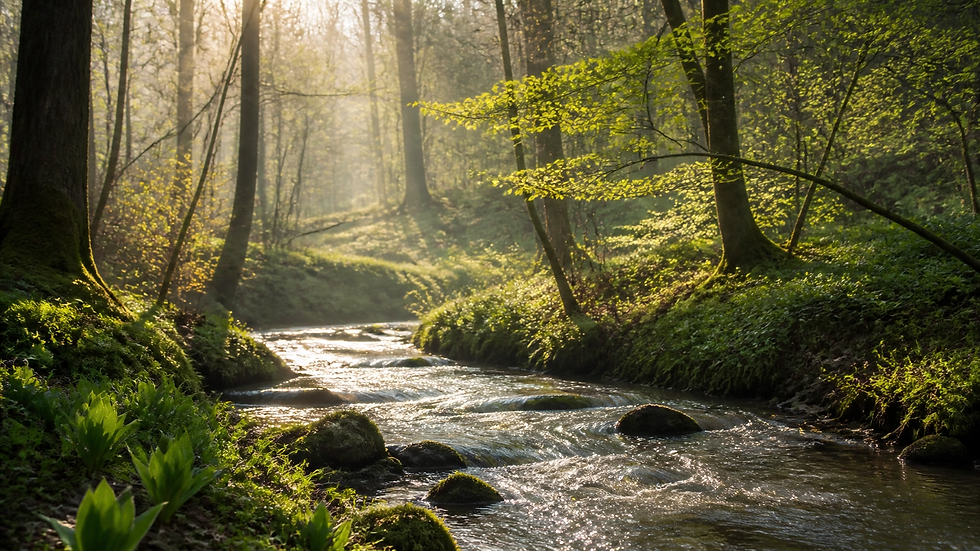
The Feeling of a Sonic Sanctuary
When David speaks through music & narration, what emerges is not just interpretation. It is atmosphere. The Sonic Sanctuary is not something one needs explained at length; it is something one feels. It lives in the hush that settles over a room when listeners are fully present. It lives in the sense that a phrase has been sung or spoken with honesty rather than display. It lives in the moment when beauty does not demand attention, but quietly earns trust.
This is part of what makes David’s work as a Steward of the natural world and Celtic Celebrant so distinctive. He does not simply present repertoire. He helps create a meeting place between text and listener, between the natural world and the human heart, between what is spoken and what is only sensed. The voice becomes a vessel, yes—but also a bridge to the echos of old.
A Few Beloved Companions Along the Way
The inspirations that shape this work are woven into it so naturally that they feel more like companions than references. O’Donohue’s love of beauty as a path toward presence. Finzi’s gentle pastoral inwardness. The old Celtic reverence for sacred thresholds. Each has, in its own way, helped & influenced David's trust that music can be both refined and welcoming, elegant and warm, thoughtful and deeply felt in expression of the human experience.
His American Premiere album Echos of Old (2025) also stands within that journey, holding questions of life, death, hope, faith, and the Divine within the natural world with seriousness and grace. It reflects the same desire that runs through all of his work: to make room for contemplation without losing human closeness, and to offer music as a place where the soul may breathe a little more freely.

Living by the Turning Light
To live by the Wheel of the Year, as David does, is to begin noticing that each part of the year asks something different of us. Spring asks for openness. Summer asks for generosity. Autumn asks for gratitude. Winter asks for inwardness. None is better than another. Each carries its own invitation.
That rhythm shapes daily life as much as it shapes art. It influences when to begin, when to rest, when to gather, when to let silence do its work. It reminds both musician and listener that wisdom often comes not through urgency, but through stillness.

And perhaps that is the deepest invitation in David’s world. Not simply to admire a body of work, but to enter a gentler way of listening. To find, in the turning of the year and the beauty of the voice, a little more peace, a little more joy, and a little more room for metanoia—for that quiet awakening by which life becomes newly luminous.
At the Threshold of the Next Season
David’s work, and the work of The Rivers of Harmony as its living vessel, offers something gracious in a restless age. It reminds us that music can still bless a room. That beauty can still gather people without noise. That a voice, offered with sincerity & reverence, can help restore our sense of belonging to the world around us.
If you step into this work, you are not simply attending a performance. You are accepting an invitation: to listen more closely, to honor the turning light, and to discover how art can become a companion at the threshold of a new season.

Comments